

.jpg?width=230&height=32&name=BBRetail001-CMYK%20(1).jpg)
-
Industries
-
Solutions
- Captive Insurance
- Cyber Insurance
- Dealer Services
-
- Employee Benefits Solutions
- Employee Benefits Administration and Technology
- Employee Benefits Compliance Support
- Data Analytics Solutions - HR and Finance Leaders
- Population Health and Well-Being Services
- Pharmacy Benefits
- Voluntary Employee Benefits and Lifestyle Benefits
- Medicare for Employers and Employees
- Non-Medical Benefits and Absence Management Solutions
- Employer Stop Loss
- Multinational Liability Insurance
- Surety Bonds
- Trade Credit Risk Solutions
-
- Agriculture
- Architects and Engineers
- Dealer Services
- Energy and Power
-
- Commercial Marine Insurance
- Recreational Marine Business Insurance
- Aquaculture Insurance
- Marine Cargo and Transit Insurance
- Marine Crew Medical Insurance
- Marine Hull and Machinery Insurance
- Marine Claims Service
- Marine Contractors Insurance
- Marine Liability Insurance
- Marine Ports and Terminals Insurance
- Marine Protection and Indemnity Insurance
- Sailing - Burgee Program
- US Sailing Insurance Programs
- Nonprofit
- Private Equity
- Public Sector
- Technology and Data Centers
- Tribal
-
- Captive Insurance
-
- Cyber Insurance
- Dealer Services
-
- Employee Benefits Solutions
- Employee Benefits Administration and Technology
- Employee Benefits Compliance Support
- Data Analytics Solutions - HR and Finance Leaders
- Population Health and Well-Being Services
- Pharmacy Benefits
- Voluntary Employee Benefits and Lifestyle Benefits
- Medicare for Employers and Employees
- Non-Medical Benefits and Absence Management Solutions
- Employer Stop Loss
- Multinational Liability Insurance
-
- Surety Bonds
- Trade Credit Risk Solutions
You are leaving bbrown.com.
By accessing this link, you will be leaving Brown & Brown’s website and entering a site hosted by another party. Please be advised that you will no longer be subject to the privacy and security policies of Brown & Brown’s website. We encourage you to read and evaluate the privacy and security policies of the site you are entering, which may be different than those of Brown & Brown.

Comprehensive Construction Insurance Programs for Businesses and Project Owners
Climate change, labor shortages, regulatory compliance, environmental concerns, supply chain issues and other risks present ever-shifting challenges for the construction industry. With Brown & Brown, you have a top-notch risk management team to help you navigate these complexities and protect your bottom line.
We work with construction businesses and project owners across the U.S. on builder’s risk, liability coverage (general, management, environmental, cyber), wrap-up programs, surety, safety services and more.
Managing Construction Risk Throughout the Project Lifecycle
In addition to insurance placement, we collaborate with you to examine risk holistically for your overall business and at a project level. We support your risk management planning at all phases of a project lifecycle:

- Financing: By analyzing risk exposures, performing risk due diligence for transactions and quantifying insurance costs, we help you avoid unexpected financial liabilities, unplanned mitigation expenses and budget overruns
- Design process: We review designs to help prevent structural and functional problems that lead to costly rework, delays, insurance surprises, compliance penalties and legal risks
- Pre-construction: Our specialists examine contracts through an insurance/risk management lens to find potential liabilities and identify necessary risk management and insurance protections
- Construction: We can help track certificates of insurance (COIs) to avoid coverage lapses, perform site inspections to identify workplace hazards, provide training to keep your team safe and more
- Property sale: When it’s time to transition your project to new owners, we work with you to identify and resolve outstanding issues to facilitate a smooth exit; this includes contract reviews and guidance on structuring indemnity provisions to safeguard your business
Why Choose Brown & Brown for Construction Insurance
Insurance companies recognize our safety culture and ability to minimize claims. This allows us to negotiate broader coverage and terms for your projects.
Brown & Brown oversees a multi-billion-dollar portfolio of builder’s risk projects and wrap-up programs. This extensive experience enables us to guide you through the risk management challenges you may encounter.
There is no project too small, too big, or too complex for us. We work with all project sizes. Small artisan endeavors, schools, hospitals, luxury hotels, brownfield redevelopment, urban high-rise buildings, stadiums, highways, infrastructure projects, state-of-the-art manufacturing facilities and more.
We’re available to brainstorm with you when you’re planning a new project or problem-solving for a current one. Reach out today with your construction insurance questions.
Brown & Brown is actively involved in construction industry associations including the Associated General Contractors of America (AGC), the Associated Builders and Contractors (ABC), the National Association of Surety Bond Producers (NASBP) and others.


.jpg?width=800&height=550&name=construction-risk-mgmt-1-800x550%20(1).jpg)
Frequently Asked Questions
Insurance requirements can vary by location and contract. Most construction projects need:
- General liability insurance (covers accidents or damage)
- Workers' compensation (for employee injuries)
- Builder’s risk insurance (for damage to the project itself)
- Pollution liability (for sudden, accidental releases or exacerbation of existing conditions)
- Professional liability (for design, engineering and performance)
- Surety bonds
Even if a coverage is not contractually required, consider what you need for business resilience.
Builder’s risk insurance protects the construction site and materials from risks like fire, theft, or weather damage during the project. It’s temporary and typically ends on the issue date of your certificate of occupancy.
Subcontractors usually need their own insurance, like general liability and workers' compensation. However, you want to do research on the specific construction project first. What coverages do the construction contracts require? Is there an OCIP (owner-controlled insurance program) or CCIP (contractor-controlled insurance program) in place? Brown & Brown can help you identify the requirements and your options for securing coverage.
Risks depend on factors like project size, location, and type of work. A risk assessment, often done with an insurance broker who specializes in construction, identifies potential hazards, so you can plan your insurance program more precisely.
Being licensed means you’re legally allowed to work in your field. Bonded means a third party guarantees you’ll complete your work or pay damages if you don’t. Insured means you have coverage for accidents, injuries, or damages.
Most states require workers’ compensation by law. This insurance covers medical bills and lost wages if an employee gets injured on the job, protecting both the worker and the employer.
Work with an attorney and an insurance broker who specialize in construction to examine your contracts. The attorney reviews contracts through a legal lens, while the broker identifies insurance and risk management concerns. You need both perspectives. You want clauses that clearly state who is responsible for specific risks, like property damage or injuries, to avoid disputes later.
Common exclusions include faulty workmanship, intentional damage, and wear and tear. Always read the policy carefully to understand what’s not covered.
Look for a broker with experience in construction insurance and the ability to tailor policies to your specific business needs and projects.
Standard insurance usually does not cover delays or cancellations. You may need a specific policy, like delay-in-startup insurance, to cover financial losses from delays.
Additional Resources

Market Trends
Brown & Brown's Market Trends Report offers a comprehensive analysis of these emerging shifts, providing strategic foresight into the critical developments redefining commercial coverage, employee benefits and personal insurance.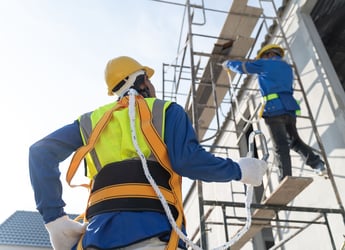
Understanding OSHA Focus Four Hazards in Construction
Established in 1970, the Occupational Safety and Health Administration (OSHA) ensures safe and healthy working conditions for workers in the U.S. Its role is especially important in high-risk industries such as construction, where it sets and ...
Workers’ Comp Insurance: 8 Ways to Trim Costs
Editor's Note: This workers’ comp insurance article originally appeared in Premier Flooring Retailer, a trade magazine published by the World Floor Covering Association. Reprinted with permission, this piece contains helpful tips for all ...Explore Other Construction Insurance Solutions

Connect with Brown & Brown
Build with confidence. From site analysis to grand opening, we’re here to help you manage risks and protect your construction endeavors. Reach out to learn more.
