


.jpg?width=230&height=32&name=BBRetail001-CMYK%20(1).jpg)
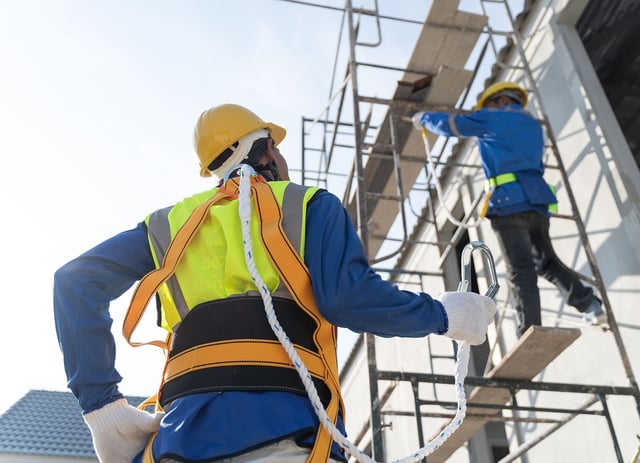
Established in 1970, the Occupational Safety and Health Administration (OSHA) ensures safe and healthy working conditions for workers in the U.S. Its role is especially important in high-risk industries such as construction, where it sets and enforces standards, provides training, and promotes safe practices to prevent injury and protect workers. The most frequently cited OSHA workplace health and safety standards highlight key equipment, tools, and precautions that can reduce risk and potentially save lives.
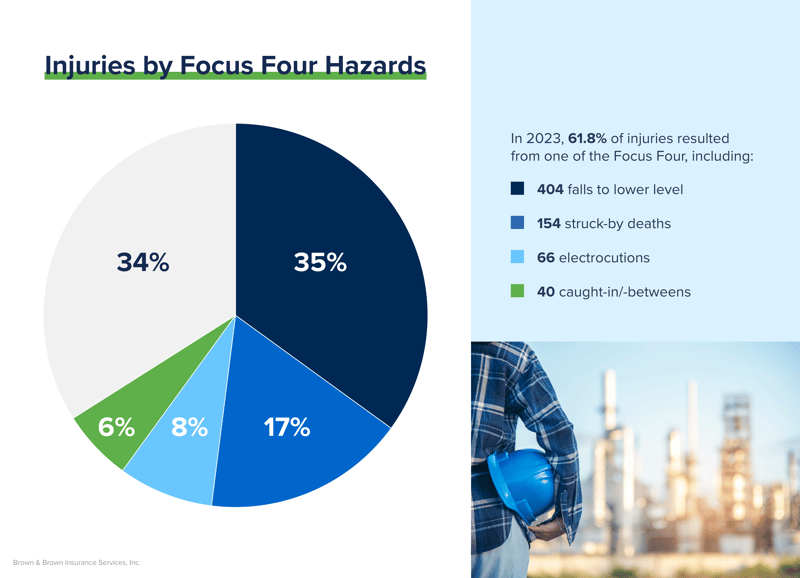
However, OSHA’s Focus Four initiative, launched in 1994, targets the four most significant safety hazards in the construction industry: falls, struck by, electrocution, and caught in/between accidents. These hazards are responsible for most physical, financial, and emotional losses. Between 2011 and 2021, 65% of construction deaths were linked to Focus Four hazards.
The initiative’s primary purpose is to raise awareness and educate workers and employers on safety hazards. Recognizing and addressing these hazards requires a well-trained team and thoughtful preplanning. Safety is a shared responsibility and must remain a constant focus on job sites.
Fall hazards
Why falls remain the leading construction hazard
Falls are the leading cause of fatalities in construction, accounting for 39% of construction deaths in 2023. They are consistently identified as the most serious hazard on job sites. A worker is considered unprotected anytime they are exposed to a fall of six feet or more without proper equipment. The severity of a fall is not determined solely by height, but also by how a person lands and the conditions of the surface below.
Preventing falls through planning and housekeeping
Housekeeping is another critical factor in preventing incidents. It should be maintained continuously throughout the day, not just at the end of a shift. Poor housekeeping can create unsafe conditions such as cluttered walkways, debris on stairs, and misplaced equipment, all of which increase the risk of trips, slips, and falls.
Common causes of fall-related incidents
Primary cases of fall-related fatalities include unprotected sides, edges, and holes, improperly constructed walking and working surfaces, improper use of access equipment, failure to use personal fall arrest systems (PFAS), and slips and trips. Common job site fall hazards include roofs, ladders, scaffolds, open-sided floors, floor holes, aerial lifts, and other fall exposures.
Struck-by hazards
Common struck-by hazards on construction sites
Struck-by hazards account for approximately 10% to 17% of construction fatalities and typically involve objects that are falling, swinging, or improperly secured. Before using any equipment, it is essential to inspect cables, systems, straps, and slings to ensure they are in safe working condition.
Preventing struck-by incidents through awareness and communication
Situational awareness is critical because job site conditions can change constantly. Failing to stay alert increases the risk of injury. Never assume others are aware of your actions. Maintain clear and consistent communication with operators and be mindful of equipment blind spots.
Struck-by incidents rank among the deadliest hazards on job sites. Most fatalities stem from falling objects, vehicle and equipment strikes, and flying objects. Crane and rigging failures put workers at serious risk, as do collisions with heavy machinery. Material-handling mishaps and flying tools or particles add to the danger. Each of these hazards can cause severe injuries or death; recognizing them is the first step toward keeping your crews safe.
Electrical hazards
Common electrical hazards on construction sites
Electrocution accounts for approximately 6% to 8% of construction fatalities and often results from exposed wiring, contact power lines, or defective tools. Workers should understand the risks associated with different voltage levels and be able to recognize potential electrical hazards on the job site.
Reducing electrocution risks through safe work practices
To reduce risks, always inspect tools and extension cords before using and ensure proper safety devices, such as ground fault circuit interrupters (GFCIs), are in place. Never make assumptions when working with electricity. Always treat every wire and source as energized and maintain a safe distance. Lockout/tagout procedures should be used whenever equipment is being serviced or not in use.
The primary causes of electrical-related fatalities include contact with overhead power lines, contact with live circuits in panels, poorly maintained cords and tools, and lightning strikes. Common electrical hazards found on job sites include exposed wiring and electrical boxes, lack of GFCI protection, damaged extension cords and equipment, arc flash incidents, and overhead power lines.
Caught-in/between hazards
Common caught-in/between hazards
Caught-in or caught-between hazards account for about 5% to 10% of construction fatalities and commonly involve trench collapses or heavy equipment. These incidents are among the most frequently cited OSHA violations. Soil conditions are unpredictable, and a single cubic foot of soil can weigh around 140 pounds, making collapses extremely dangerous. Protective systems are required at five feet or deeper, and materials should be kept at least two feet from the edge to reduce risk. There is no room for shortcuts in trenching and excavation work.
Preventing trenching and equipment-related incidents
Awareness and communication are essential when working around machinery. Always stay clear of equipment swing radius and avoid blind spots where operators may not see you. Wear seatbelts when operating equipment, and maintain constant communication with operators. Before digging, always verify the location of underground utilities by calling ahead. Being proactive and alert to changing conditions helps prevent caught-in or caught-between incidents.
Caught-in/between incidents rank among the deadliest hazards in construction, claiming workers through trench collapses, rotating or unguarded equipment, rollovers, stored energy during servicing, swing-radius pinch points, and utility strikes. Nearly all these fatalities share one trait: a missing safeguard. You can help prevent them by installing protective systems before entry, keeping machine guards in place, applying lockout/tagout, marking swing radius zones, and locating utilities before excavation begins.
How to recognize and report OSHA Focus Four hazards
The role of a competent person
The key to controlling Focus Four hazards is having a proactive and competent person in the field that can recognize hazards and stop them before life-changing injuries occur. Being proactive means planning, training, and inspecting equipment prior to use. A competent person can predict the dangers of the work that is being done on any given day and take the correct measures to mitigate risks.
Reporting workplace hazards to OSHA
To report unsafe working conditions or hazards, you can file a complaint directly through OSHA’s website at www.osha.gov.
Explore our Webinar Series - OSHA Focus Four in Construction
About the author
Luke Curry serves as a Senior Safety Consultant for Pro Safety Services, a segment of Brown & Brown, bringing 22 years of experience across the construction, manufacturing, service, healthcare, and public sector industries. He specializes in program development, hazard identification, accident investigation, and OSHA consultations, helping organizations build practical safety solutions. He carries the Certified Safety Professional (CSP) designation and shares his knowledge as an OSHA Instructor in Construction.