


.jpg?width=230&height=32&name=BBRetail001-CMYK%20(1).jpg)
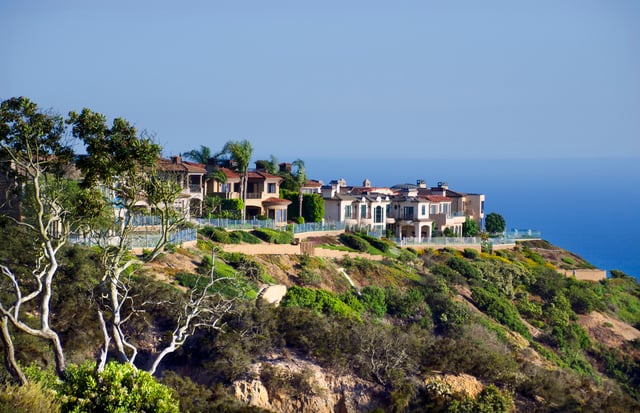
California is facing one of the most challenging personal insurance environments in its history, made significantly worse by the devastation of the January 2025 wildfires. Economic losses from natural disasters in Q1 2025 reached $83 billion globally, with insured losses projected at $53 billion. The California wildfires were the primary driver behind both figures.
Following these catastrophic losses, insurance carriers have tightened capacity even further across the state. What was already a difficult market in California has become significantly more restrictive in the past year, particularly for high-net-worth individuals with complex property and liability needs.
Market conditions continue to evolve in California
Market conditions continue to evolve rapidly, driven by the increasing frequency and severity of natural disasters, rising construction costs, inflation and a highly regulated insurance environment. The result is a system under strain where long-standing policies are being non-renewed, coverage terms are narrowing, and premiums are rising sharply.
Understanding California’s insurance landscape is no longer optional for homeowners. Creative, non-traditional solutions have become the norm rather than the exception.
Here’s what high-net-worth (HNW) individuals need to know and do to navigate California’s private insurance market and maintain adequate protection.
Escalating complexity in California's insurance market conditions
In California’s current insurance environment, securing coverage often depends as much on market knowledge and California-specific broker experience as it does on the risk itself. These market conditions are changing the insurance landscape in California:
Shrinking carrier capacity
Insurance carriers continue to reduce their exposure in California. Capacity has tightened even further since the January 2025 wildfires. Some have stopped writing new property policies, while others have exited entire counties due to aggregation concerns. Even properties located outside traditional wildfire zones are being impacted as carriers reassess total exposure across their portfolios.
This contraction has significantly reduced available capacity and limited options for homeowners seeking coverage, renewals, or increased limits.
Rate increases
Carriers remaining in California are increasing rates across all lines of business and for all California risks. If you’re living in California, you’ve seen these increases firsthand.
-
Homeowners' insurance and auto insurance are the most strongly impacted lines, due to the volume of direct losses in those areas. Damages have been so widespread across the state and the losses are interconnected, leading to rate increases across the board, not just for property. Construction costs also continue to rise, further contributing to mounting homeowners' insurance losses and driving the hard market.
-
Many high-net-worth individuals are being pushed into the non-admitted market to secure coverage. In this environment, a 50% premium increase is often viewed as favorable, while others are seeing increases of 200-300% depending on location, construction type, and risk profile.
Tighter underwriting requirements
Underwriting standards have become more rigid over the past year. The few carriers still doing business in California are becoming incredibly selective on what they underwrite. Clean loss histories alone are no longer enough. Insurers are requiring demonstrable risk mitigation and are issuing non-renewals even on long-held policies.
For high-value homes with replacement costs exceeding $30 million, many carriers are automatically transitioning policies from admitted programs to non-admitted placements regardless of prior history. In many cases, homeowners are paying more for less coverage, as a result.
Non-admitted insurance carriers and creative solutions
California’s insurance market is highly specialized, and access to the right carriers, structures, and timelines can make the difference between a non-renewal and a workable placement. Working with someone deeply familiar with California’s regulatory and underwriting nuances has become critical.
Traditional “off-the-shelf" policies are no longer easily available in this complex environment. HNW individuals (and their brokers) are having to explore alternative solutions, get creative, and layer multiple policies to make sure they have coverage.
Growth in the non-admitted market
Non-admitted carriers continue to play an increasingly central role in California’s personal insurance market. While the concept is no longer new to many homeowners, reliance on these markets has expanded significantly.
Non-admitted carriers operate with less regulatory oversight and are therefore able to respond more quickly to changing conditions through flexible rates and policy terms. This adaptability has allowed them to continue writing business where admitted markets cannot. For example, many non-admitted carriers added Wildfire Deductibles to their policies. Admitted carriers who’ve tried to add a Wildfire Deductible have been rejected by the California Department of Insurance.
Over the past year, more non-admitted carriers have entered the California market, increasing choice and competition. This growth will continue in the coming years. However, these solutions remain costly and require careful structuring to balance coverage, pricing, and risk.
Creative solutions and multiple policy strategies
The days of one insurer being able to cover everything a successful family or individual needs are effectively over in California. Now, adequate coverage needs to come from multiple carriers and policies pieced together by a skilled insurance advisor, tailored to each individual or family’s needs. Separate placements and policies may include workers’ comp, difference in conditions, personal liability, collections, auto, home, and umbrella liability.
While layered strategies can restore limits and fill gaps, this also introduces complexity and requires additional lead time to put all the pieces together.
Securing high limit liability placement has become particularly challenging. Some umbrella carriers now refuse to layer over non-admitted underlying policies, further limiting options for high-limit coverage.
California FAIR Plan
The California FAIR Plan is a state-run insurer of last resort for property owners in high-risk zones with no other homeowners' coverage options in traditional or non-admitted markets. Even high-net-worth individuals may need to turn to the FAIR Plan if they are in wildfire or CAT zones where no admitted or non-admitted options are available.
FAIR plan quotes typically require significant lead time and should be considered early in the purchasing or renewal process.
Self-insurance and alternative risk strategies
As insurance options narrow and premiums rise, a small but growing number of high-net-worth homeowners are choosing to partially self-insure rather than pay the cost of increasingly restrictive coverage. This approach is most often seen on high-risk properties where premiums have become prohibitively expensive or coverage terms are significantly reduced.
In these cases, some homeowners are redirecting funds that would otherwise be spent on insurance premiums into advanced wildfire defense and property protection systems. These investments may include perimeter and rooftop sprinkler systems, ember-resistant venting, and technology-driven wildfire detection and suppression solutions.
Workers’ compensation: California law to provide coverage to domestic workers
It’s California law that homeowners must provide workers’ compensation for all domestic workers, even if those workers are part-time. Workers’ compensation is often included in traditional admitted California homeowners' policies, but it is not included in non-admitted homeowners’ policies.
As more high-value homes and high-net worth policies are rolled into the non-admitted market, you should pay close attention to this. Any homeowner with domestic employees must secure a separate, dedicated workers’ comp policy to ensure compliance and protect employees, unless the staff is hired through an agency that provides this coverage.
Why is auto insurance difficult to obtain in wildfire-prone areas in California?
Auto insurance rates continue to rise, and coverage can be more difficult to obtain if garaged in a wildfire-prone area. In addition, due to the hard market, many auto insurers in California continue to impose mandatory waiting periods before binding new policies.
This means you should communicate with your broker well before purchasing a vehicle to make sure you have coverage at or near the time of purchase. This is especially true if you need a new California auto policy and are not just adding a vehicle to an existing policy.
Is flood insurance and earthquake insurance included in homeowners' insurance policies in California?
A common misconception is that flood damage is covered under standard homeowners' policies. It isn’t. If you’re a homeowner in California, make sure you have flood insurance, purchased separately. Without it, if a flood event were to occur, you could be facing staggering out-of-pocket costs to repair damage.
Given the frequency and high potential of earthquakes in California, earthquake insurance is another must-have in the California market. Earthquake-related losses are also not included in standard homeowners' policies.
Why is risk mitigation more important than ever in California?
Risk mitigation measures have shifted from recommendations to underwriting requirements. Insurers increasingly mandate the following:
- Central station fire and burglar alarm monitoring
- Water leak detection and automatic shut-off valves
- Seismic gas shut-off valves
- Retrofitting foundations to meet 1997 code standards – this it important even if you are not getting earthquake insurance, since house fires that make happen after and because of an earthquake are covered
- Closed roof eaves and ember-resistant vents
- Wildfire-resistant landscaping that creates defensible space
Many homeowners are also investing directly in advanced wildfire defense systems or professional risk assessments to protect their properties. While these investments do not guarantee insurability, they provide peace of mind and strengthen your risk presentation to insurers.
Practical steps for navigating California’s insurance market
In today’s challenging California insurance environment, taking the following steps can help position you for stronger coverage and better outcomes.
- Give your insurance broker plenty of lead time: Brokers need as much lead time as possible to prepare quotes for new property purchases, especially since this may now require piecing policies together from different carriers. Loop your broker in on the home-buying process as soon as possible; contact your broker as soon as you make an offer on a home.
- Put three or more lines of coverage with the primary carrier: Many high-net-worth insurance carriers now require a minimum of three lines of coverage — such as homeowners, auto, and umbrella — in order to offer higher liability limits.
- Communicate before buying a car: Auto insurance placement may involve waiting periods. Plan ahead to avoid gaps in coverage and let your broker know as soon as possible when you are planning to purchase a car.
- Ask an advisor before submitting a claim: Consult with your insurance advisor before submitting a personal insurance claim with your carrier. In addition to offering immediate support, your advisor can help you understand potential implications on your broader insurance portfolio.
- Pay on time: Some insurers will not reinstate coverage once cancelled for non-payment. This would require re-submission of your risk and requalification under the current new business guidelines that are stricter. On-time bill pay is also important to maintain a good relationship with the insurance company.
- Be loyal to your insurer: Continuity with carriers is important and looking for a new insurer does not guarantee a better rate. In some cases, moving to a new carrier may result in non-renewal and fewer options.
- Be prepared to provide detailed property information: Insurers increasingly require detailed updates and information on electrical systems, plumbing, roofing, and HVAC when remarketing or renewing coverage. Without this information, quotes may not be available.
Learn more about the California insurance market for high value homes
California’s insurance market requires specialization, licensing, and deep carrier relationships. Working with a broker who understands California-specific regulations and market dynamics can make the difference between limited options and workable solutions.
The market is unlikely to soften in the near term. Preparation, mitigation, and experienced guidance remain the most effective strategies for protecting high-value assets in California’s evolving insurance landscape.
For more information on the high value home insurance market in California, you can reach our specialist team by submitting our secure form.
About the Author
Stephanie Wright specializes in designing comprehensive insurance portfolios for Ultra-High-Net-Worth, High-Net-Worth, and Family Office clients. She provides advice on complex risks, including high-value homeowners, auto, collections, and liability coverage. With an in-depth understanding of the California insurance market, industry products and contract nuances, Stephanie works closely with carriers to ensure her customers receive the most robust coverage tailored to their specific needs. She is also adept at managing specialized insurance risks such as high-value property, course of construction projects, cyber, and hard-to-place risks with wildfire, earthquake, and flood exposures.