


.jpg?width=230&height=32&name=BBRetail001-CMYK%20(1).jpg)
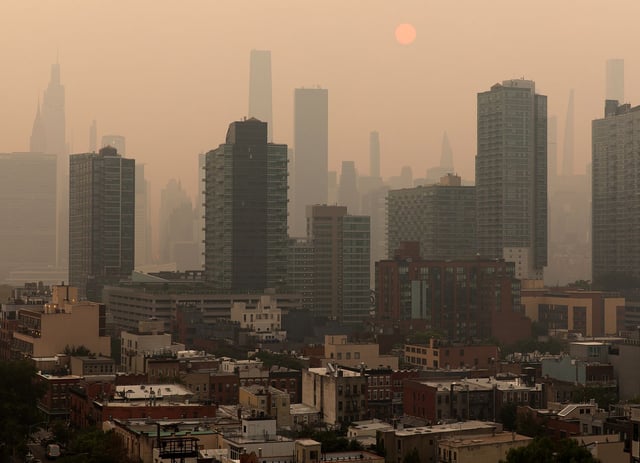
Wildfire smoke does not stop at the fire line. In recent years, smoke plumes from large wildfires have blanketed cities hundreds of miles away, turning the air hazy and pushing particulate matter into buildings that have never faced a wildfire threat directly. Commercial real estate owners and property managers across the country, not just in the West, need to treat smoke as a routine operational and risk management concern.
Smoke infiltration can damage HVAC systems, trigger tenant complaints, raise liability concerns, and lead to insurance claims. Buildings that lack a documented response plan face steeper recovery costs and harder conversations at renewal. This guide walks through what to do before, during, and after a wildfire smoke event, with a focus on what insurers look for and how preparation shapes financial outcomes.
Why wildfire smoke is a nationwide commercial real estate risk
High-altitude smoke plumes can cover thousands of miles in a matter of days. When smoke reaches a metro area, fine particulate matter (particles 2.5 microns or smaller, known as PM2.5) infiltrates commercial buildings through outside air intakes, exhaust ports, loading dock doors, elevator shafts, and gaps in the building envelope. Buildings with older HVAC systems or low-efficiency filtration are especially vulnerable.
The result is degraded indoor air quality (IAQ), meaning the air inside the building contains elevated levels of harmful particles, even when occupants can't see or smell smoke. Fine particles at elevated concentrations pose health concerns, particularly for people with respiratory conditions.
Wildfire smoke challenges for owners and property managers
When smoke arrives, the pressure is immediate:
- Tenants report eye irritation, headaches, and respiratory discomfort and want to know what you're doing about it
- Visitors and staff raise exposure concerns, sometimes publicly
- You face pressure to keep buildings open, even as indoor air conditions worsen
- The cleaning and remediation scope after a prolonged smoke event is rarely clear-cut; over-responding wastes money, and under-responding creates potential liability
- If you don't document your actions during the event, you have little to show insurers or attorneys later
- Liability exposure increases when occupants believe the building was unsafe and management was slow to act
Property damage and liability risks from wildfire smoke
Property damage and HVAC impacts
Smoke infiltration can coat surfaces and HVAC components with soot and ash and leave persistent odors. It loads filters faster than normal operating conditions. Cleaning and remediation costs can be substantial, particularly in buildings with exposed ductwork, open ceiling systems, or extensive soft furnishings. HVAC systems that operate under heavy smoke conditions without filter monitoring face accelerated wear and potential equipment damage.
Indoor air quality complaints from building occupants
Liability exposure in a smoke event typically centers on indoor air quality allegations. Occupants or their employers may say that building management failed to act quickly enough. They may deem the building uninhabitable or claim that prolonged exposure caused health harm. Tenants may dispute lease obligations, seek rent abatements, or raise business interruption claims of their own. Visitors or on-site employees may file allegations of exposure-related harm. These claims are easier to defend when you have a documented record of the conditions you observed and actions you took.
Insurance considerations for wildfire smoke-related losses
Before a smoke event occurs, review your coverage across three areas:
Property insurance and smoke damage
How does your policy respond to smoke infiltration and contamination scenarios? Does it cover remediation costs, HVAC cleaning, and contents damage from smoke and odor?
Liability coverage for occupant exposure
Do you have adequate protection against negligence allegations tied to indoor air quality? Could pollution exclusions or environmental coverage limitations affect smoke-related bodily injury claims?
Business interruption and operational disruption
What happens if a building must reduce operations or close? Is there coverage for revenue loss or extra expenses related to temporary relocation?
Coverage for smoke-related losses can vary widely, depending on the policy, jurisdiction, and other factors. Look carefully at exclusions, sublimits, waiting periods, deductibles, and notice requirements. Understand what you're required to report and when. Accurate building data and documented risk controls strengthen your position at renewal, particularly as insurers scrutinize wildfire smoke-related claims more closely.
Wildfire smoke preparedness measures that insurers evaluate
Documented preparation helps position you for more favorable insurance outcomes. The six areas below deserve close attention.
Create a written smoke readiness plan
Answer these questions in your documentation:
- Who monitors air quality alerts?
- Who holds decision-making authority for building operational changes?
- What conditions trigger action?
- How do you communicate with tenants and staff?
- How do you document decisions and actions during an event?
A plan has limited value if no one uses it. Walk your team through it before smoke season and update it after each event.
Review HVAC and filtration readiness
Check your current filter ratings and whether your system can support higher-efficiency filtration.
- Inspect dampers and outside-air settings
- Stock extra filters before peak season
- Plan for accelerated filter replacement during a smoke event, because loaded filters lose effectiveness quickly and can restrict airflow
Make sure your HVAC technicians know the plan.
Inspect the building envelope for smoke entry points
Examine doors, windows, loading docks, roof penetrations, and vents for gaps or sealing failures. Not every opening can be sealed, but understanding where uncontrolled smoke entry is most likely to occur helps you prioritize protective measures and communicate known vulnerabilities to your insurer.
Establish indoor air quality monitoring
Portable or fixed IAQ sensors that measure PM2.5 give you real-time data to support decisions. Sensor data also creates a factual record of what conditions were inside the building during a smoke event, which is valuable for both liability defense and claims documentation.
Coordinate with restoration and HVAC vendors
Identify your restoration contractors, HVAC service providers, and environmental consultants before you need them. Confirm response times and scope of services. During a regional smoke event, qualified vendors get busy fast. Pre-established relationships give you priority access.
Maintain documentation that supports underwriting
Maintenance logs, filter specifications, inspection records, smoke response procedures, and records of capital improvements all tell a story about how you manage your properties. Bring this documentation to renewal discussions with your broker. Underwriters weigh demonstrated discipline when setting terms.

How to protect a commercial building during a wildfire smoke event
Adjust building operations to limit smoke entry
Reduce outside air intake according to your HVAC system's capabilities. Limit unnecessary door openings, particularly at loading docks and high-traffic entries. The goal is to reduce uncontrolled smoke entry while maintaining acceptable conditions inside.
Monitor filtration and indoor air quality
Keep air-handling systems running to filter indoor air and watch filter loading closely. A filter that's saturated with particulate matter no longer protects occupants effectively. Check PM2.5 readings at regular intervals and track trends rather than reacting to single data points.
Minimize additional indoor pollution sources
Limit activities that add particles to indoor air. This includes avoiding the use of gas-powered equipment indoors, minimizing construction or renovation activities that generate dust, and reducing combustion sources where possible.
Provide clear updates to tenants and occupants
Provide factual, measured updates. Tell occupants what you're monitoring, what operational changes you've made, and where they can get updates. Avoid language that either dismisses concerns or overstates risk. Clear communication reduces friction and establishes a record of transparency.
Document conditions, decisions, and response actions
This is one of the most important steps you can take during a smoke event and one of the most frequently overlooked. Log air quality readings, HVAC adjustments, filter change dates and times, vendor calls, tenant complaints and your responses, and any operational decisions and the reasoning behind them. A timestamped log turns a chaotic event into a documented, defensible response. It supports claims, responds to liability allegations, and demonstrates to insurers that you operated with discipline.
How to assess and recover after a wildfire smoke event
Inspect the building before returning to normal operations
Before resuming full outside-air ventilation and standard building operations, conduct a walkthrough to assess soot or ash accumulation, filter condition, and HVAC system status. Don't assume the building is clean because the smoke has cleared outside.
Evaluate cleaning or remediation needs
Base your decision on IAQ data and inspection results. Not every smoke event requires full remediation. Decisions informed by data are easier to defend and less likely to result in either unnecessary expense or under-response claims later.
Organize documentation for claims and renewals
Collect and organize photos, vendor reports, work orders, monitoring logs, and records of tenant complaints and communications. Your claims team and your broker need this material. Missing documentation weakens both your claims position and your renewal narrative.
Evaluate the response and update the readiness plan
Treat each event as a learning opportunity. Where did communication break down? Were vendors reachable? Did your IAQ sensors give you actionable data? Update your smoke readiness plan based on what you observe and use the post-event review to build a stronger underwriting story going forward.
How wildfire smoke preparation can influence insurance outcomes
Smoke does not need to cause visible fire damage to generate cost, tenant friction, or liability exposure. A prolonged smoke event that degrades indoor air quality can trigger claims and renewal complications even when the building itself remains structurally untouched.
Before wildfire season, review how your property, liability, environmental, and business interruption coverages may respond to smoke-related losses. That conversation can help surface key issues such as notice requirements, exclusions, deductibles, waiting periods, and documentation expectations.
It also helps to review lease language tied to indoor environmental conditions, notice obligations, access issues, and operational disruption. When smoke affects a building, those details can shape tenant communication and response decisions.
Insurers reward discipline. A property with strong maintenance records, a written smoke response plan, and a clear decision log from a prior event has a more attractive risk profile than one with no records and a reactive posture. Your preparation can affect insurance availability, terms, and pricing.
Wildfire smoke is no longer a regional or seasonal concern. It is a nationwide commercial real estate risk management issue requiring a plan before smoke reaches your air intakes.
Connect with Brown & Brown
For questions or more information about wildfire smoke risk management for commercial real estate, you can reach a specialist through our secure contact form.