



Brown & Brown’s PharmaLogic® Spotlight communications review evolving pharmacy dynamics and trends driving prescription drug use and cost to guide benefits decision-making.
New Drug Approvals Influencing Benefits
More than forty new drugs and four gene therapies have been approved already in 2026. New products generating interest or beginning to appear in prescription benefits include:
- Rasonque™ for pancreatic cancer
- Xocova® to prevent COVID-19 infection in patients exposed to an infected person
- Icotyde™ for plaque psoriasis
- Lipfendra® to lower LDL cholesterol
- Baxfendy™ to treat hypertension
- Foundayo™ an oral GLP-1 for weight loss
- Lifyorli™, an oral drug for ovarian, fallopian tube and peritoneal cancer
- Orzeyful™ for type 1 narcolepsy
- Simtriyo® for attention-deficit/hyperactivity disorder (ADHD)
- Juvmo™ for Parkinson’s disease
FDA approval of CagriSema™ is anticipated by the end of 2026 for the treatment of obesity. This new drug combines semaglutide, a GLP-1, with cagrilintide, an amylin agonist, in a weekly injection.
Approval of Foundayo™ for type 2 diabetes is also anticipated late in 2026.
Next Steps
-
Plan for costs related to new medications introduced to the market.
Trends Impacting Rebates
The economic framework of pharmacy benefits has long included rebates as a source of value for benefit plans. As pricing models evolve, pharmacy benefits increasingly shift toward a net cost focus, away from higher list prices and robust rebates to lower list prices and lower rebates. Rebates are also impacted by legislation, benefit design choices, and biosimilar availability.
-
Reduced list prices with lower or eliminated rebates for some drugs
-
Federal and state policy changes impacting drug pricing
-
Increasing application of rebates at the point-of-sale, delivering rebate value to patients up front
-
Evolving net cost pricing models, some with drug-level rebates
- Formulary designs favoring biosimilar options
Next Steps:
-
Plans that have historically used rebates, often paid separately months after claims are incurred, to support plan premiums and other financial obligations need to plan for changes occurring in the market.
-
Review rebate guarantee updates made by PBMs to understand how they impact budget projections for your plan.
-
Compare your plan’s contract for pharmacy benefits to other models in the marketplace.
- Brown & Brown can assist with this review and provide an analysis comparing various pricing models that are available.
Vaccines and Treatment
Most pharmacy benefits cover routine vaccines administered in pharmacies, providing convenient access to these preventive therapies. Influenza, COVID-19, respiratory syncytial virus (RSV), pneumococcal and shingles vaccines are commonly administered by pharmacists.
CDC vaccine recommendations:
New
-
Xocova® is a new oral medication approved to prevent COVID-19 in patients who were exposed to an infected person. The average cost per Rx is $1,345
- mFLUSIVA® is a new influenza vaccine, the first messenger RNA based option
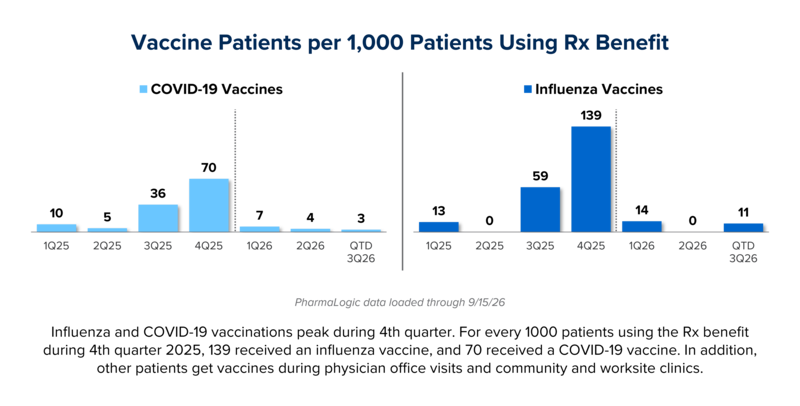
Moderna has begun a clinical trial of its mRNA vaccine against the Ebola virus. Ebola is widespread in sub-Saharan Africa and is not spread the same way as flu and COVID respiratory viruses.
Next Steps:
-
Ensure convenient access to vaccines for plan members by allowing and promoting use of retail pharmacies for routine vaccinations.
- Anticipate higher vaccination costs during the 4th quarter, when seasonal vaccine use is highest.
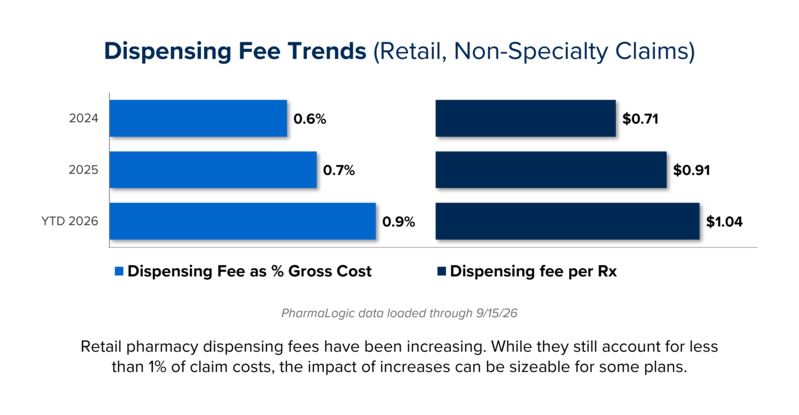
Dispensing Fees Increasing
State legislation and federal programs have mandated or encouraged increased pharmacy dispensing fees, bypassing standard contracted dispensing terms.
State-level mandates
Legislation, often tied to Medicaid or PBM reform bills, passed in several states requires payment of higher dispensing fees, between $10 and $15, to retail pharmacies. The higher dispensing fees are often tied to alternate cost models such as NADAC (National Average Drug Acquisition Cost). Benefit plans with a sizeable number of patients residing in these states are impacted more than others.
States Enacting Legislation Requiring Payment of Higher Retail Pharmacy Dispensing Fees
|
|
|
Federal negotiation impact
The Medicare Drug Price Negotiation Program (established under the Inflation Reduction Act of 2022) significantly altered the reimbursement structure on certain drugs covered under Medicare. The products, when processed through Medicare, are capped at a maximum fair price (MFP) plus a dispensing fee which is undefined by CMS.
Pharmacies have reported negative financial consequences of below-cost reimbursements and payment delays and are pressing for increased dispensing fees to offset the reimbursement gap and cash flow concerns. This affects all network pharmacies but is a particularly hot topic among long-term care pharmacies and advocates, given these pharmacies provide specialized and high-touch medication management services at a very narrow profit margin.
Next Steps:
-
Work with your Brown & Brown representative to understand the impact of higher dispensing fees on your plan’s current spend and expense forecast.
- Discuss dispensing fee contract terms and other strategic options with your Brown & Brown representative.
GLP-1s
Use of injectable weight loss GLP-1 drugs Wegovy® and Zepbound® still prevails over the newer, oral options Foundayo™ and oral Wegovy®.
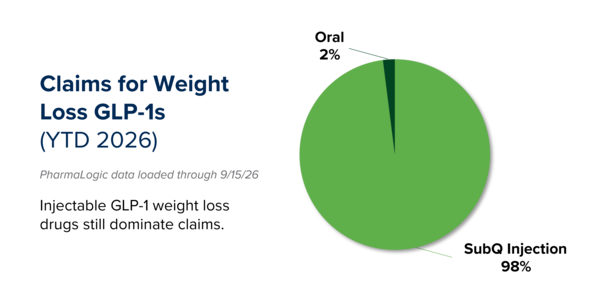
Research continues to focus on developing weight loss options that are more effective with convenient dosage forms and fewer adverse effects.
- FDA approval of CagriSema™ is anticipated by the end of the year. This new drug combines semaglutide, a GLP-1, with cagrilintide, an amylin agonist, in a weekly injection.
- Retatrutide, an investigational injectable therapy with a brand name still pending, remains in late-stage clinical trials and is expected to undergo FDA review in 2027.
Medicare GLP-1 Bridge
The Medicare GLP-1 Bridge is a CMS demonstration providing eligible Part D beneficiaries access to certain GLP-1 weight-loss drugs from July 1, 2026, through December 31, 2027. Key details include:
-
Demonstration operates completely outside of standard Part D benefit coverage and payments.
-
Starting fall 2026, CMS will send monthly utilization data (member-level and NDC data) to Part D sponsors. Reports will be distributed through Acumen’s ABII portal.
Consider this: Medicare GLP-1 Bridge demonstration project utilization may determine a member's future eligibility for weight-loss product coverage under the standard Part D benefit. The utilization reports are critical for your plan's future financial risk (specifically if the BALANCE Model goes into effect in 2028). If your plan does not have direct access to this CMS reporting, contact Brown & Brown to support discussions with your PBM about reporting.
Continued GLP-1 utilization growth creates affordability and sustainability challenges for benefit managers. Some plans have made difficult decisions to exclude coverage and advise members to consider manufacturer direct-to-consumer and other tele-health options. Most benefits still covering these drugs require prior authorization, enrollment in a behavioral nutrition program for coverage or increased patient copays. Unit pricing for GLP-1s is gradually improving as competition grows, and manufacturers strive to maintain and grow market share of their products.
Next Steps:
-
Brown & Brown can support discussions with PBMs and disease management providers to refine your benefit strategy for weight loss and other GLP-1 indications.
Biologics for Asthma / Other Respiratory Conditions
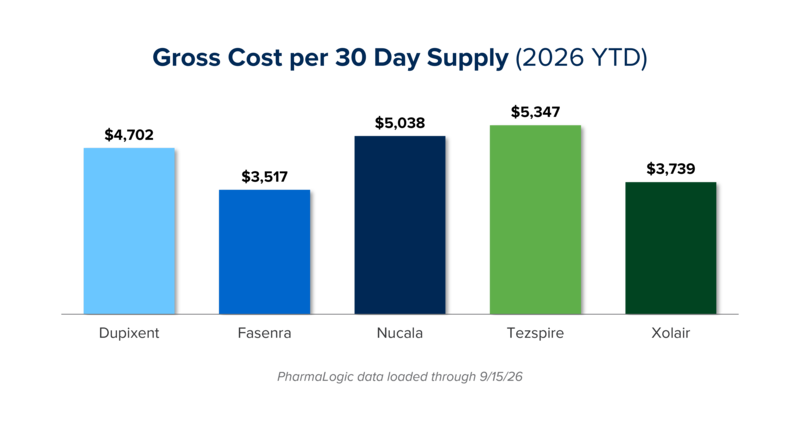
Several biologic drugs are now available to treat asthma, nasal polyps, chronic obstructive pulmonary disease (COPD) and other respiratory conditions. These biologics are generally specialty drugs, carrying a higher price tag than traditional drug options. Use of these biologic options is growing.
Next Steps:
-
Brown & Brown can help assist you in discussions with PBMs to ensure that appropriate authorization is required for use of these products.
ADHD and Sleep Disorder Treatments
New medications with novel mechanisms of action to treat attention deficit/hyperactivity disorder (ADHD) and narcolepsy, a sleep disorder, were recently FDA approved and will be available later this year following DEA (Drug Enforcement Administration) review.
- Orzeyful™ to treat type 1 narcolepsy
- While other treatments focus on relieving symptoms of narcolepsy, Orzeyful is the first to target the cause of the condition.
- Simtriyo® to treat ADHD
- First drug in a new class of drugs to treat ADHD, blocking the reuptake of three neurotransmitters to help regulate attention and behavior.
Next Steps:
-
Understand that most current ADHD drug utilization is related to generic products and that a new brand, such as Simtriyo, will add brand costs to that category.
- Brown & Brown can help assist you in discussions with PBMs to ensure that appropriate benefit design features are in place for use of these products.
About PharmaLogic®
PharmaLogic® is Brown & Brown’s proprietary pharmacy data analytics platform that enables millions of dollars of annual financial savings and provides intelligent clinical analytics that positively impact individual medication access and improve overall population health. PharmaLogic® is leveraged for PBM contract modeling, PBM RFPs and/or negotiation, ongoing claims monitoring, advocacy and management, and consulting services to ensure that customers understand plan design, trends, forecasts, and issues that impact spend and population management.
Brown & Brown is ready to assist you as you face new prescription benefit challenges and contemplate benefit changes and potential solutions. Together, we can review strategies with PBMs, including optimizing formulary incentives to support biosimilar use and utilization and behavioral management related to new and continuing drug therapies.